
Does God have to Tell You to be Honest?

I listened to a conversation between pastors John Piper and Rick Warren recently. From their theological towers, one can barely see the other’s camp on the edge of the horizon. Piper, a died in the wool Calvinist, wanted to talk with “Whosoever will can come” Warren about Warren’s book The Purpose Driven Life. While the two could have staked out their own territory like medieval lords protecting their castle, they lowered their theological drawbridges and met in the valley to honestly talk about faith and life in Christ.
Greg Laurie – We Preach Jesus

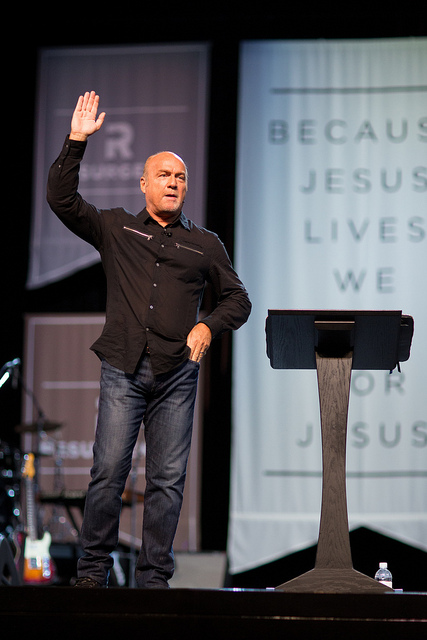 I walked into the auditorium to Laurie’s words “God’s story of 2000 years ago is relevant today. The story of Jesus is relevant today, and God’s Word is relevant today.” Speaking to a room full of pastors and church leaders, Laurie continued. “If you build your church on the razzle dazzle, your people will come expecting it. If you build your church teaching the Word of God, your people will come with their bibles open, ready to learn.”
Laurie spoke for nearly an hour, basing his comments from Paul’s open air sermon on Mar’s Hill in Acts 17. Like Paul, he spoke about our nation as a place that is unfamiliar with Jesus, his claims or his saving power. Laurie didn’t spend time with tradition, doctrine, or talking about his how church does church, because the Resurgence conference isn’t about policy, programs or doctrine. Preaching the gospel of Jesus is about reaching the culture with an eternal message, not a 2000 yr old message, or a few hundred year-old traditions. Laurie concluded his conversation with the attentive audience with these six points.
Resurgence R12 conference – from Mark Driscoll and Mars Hill Church

What does passion look like? I know when I see it. I can see the difference between a sports team playing with passion and one that is going through the motions . . . when I see it. But at its core, what does passion look like? In scripture, I read the gospel writer making specific reference to Jesus face. Maybe passion is something you see when you look into a person’s eyes. What did Jesus communicate with his eyes that made the gospel writer pen, “He looked and had compassion on them?” He wept over his friend’s death, and made such an impact on his friends that they made sure to record it for us. Jesus turned over the tables with a handmade whip as he declared, “My fathers’ house will be a house of prayer.” Maybe that’s what passion looks like.
A True Story Worthy of Tom Clancy’s Byline.

 I met Kim shortly after she returned from the Ukraine, or should I say escaped? The ordeal still embedded in her eyes, she told me the story of being underground in the former Soviet bloc country, trying to get home with the little boy she’d legally adopted. We’re spoiled here in America. Laws protect us (most of the time) from corrupt officials who use their offices for their own benefit at the expense of the helpless. Kim’s story is one of courage, true love, and a mom’s passion to help and protect the Ukrainian orphan she and her family grew to know and love. Somewhere along the way, the conflict became personal to a corrupt government official, and Kim’s flight became a race against politics and power in a foreign country.
Until We all Come Home is the story of Kim and her family’s love and passion. On the run in a country in which she didn’t speak or understand the language, those who helped her understood the love she had for her son, and a mother’s devotion to her children. Until We all Come Home reads more like a Tom Clancy novel . . . well . . . if Tom had been a mom. Only then could he have told this true story.
The book releases on November 6th, 2012, so don’t let the election get in the way of your trip to the book store. You can pre-order it now through all the major online book sellers.
Seriously, God? Really – Seriously?
 Jenny Smith wrote Seriously God as a way to tell her family’s story. After building the stereotypical American home and career, Jenny and her family experienced a home foreclosure and job loss combined with high gas and grocery prices that twisted the family budget hopelessly out of shape. The title and the message of this book arose from Jenny’s heart-felt prayer.
“Seriously? Really? We’ve been doing everything right, and this is how life is ending up? Seriously God?”
The turmoil in the author’s life is the genesis of this book, and she relates the path she walked to lessons she learned from a small garden in the backyard, and from lessons from Jesus’ life, both of came into clearer focus only as a result of her journey.
Jenny focuses on the “I Am” statements which Jesus made during the final year of his ministry. She paints the picture of his life, the setting in which he spoke, and makes the context come alive for the reader. Even though I’ve read the gospels for decades, Jenny’s scholarship brought to life details with which I was unfamiliar. For example, Jesus stood and declared “I am the Bread of Life” shortly after his first feeding of the multitude, and in the midst of a crowd that had been following him because of the free meal. Were they just looking for bread and fish? Jesus wanted to give them more. Were they enthralled with the itinerant preacher because of the things they received from him? Jesus expected more.
From her personal story throughout the book, Jenny seems to say that she learned through the trials that Jesus wanted to give her family . . . and expected from her personally . . . more. He had more for her than a comfortable, financially stable and prosperous life, and like Job, not until the stability and comfort were taken away could Jenny gain a clear vision of what “more” looked like.
I recommend Jenny’s book highly. Her storytelling and biblical research are both excellent. At the end of each chapter, she includes discussion questions so this book could also be used as the basis for a small group study and discussion.
Are you Coming?

Maranatha Christian Writers’ Conference will hold their 35th annual conference on the shores of Lake Michigan, near Muskegon. The 2012 conference, which takes place Sept. 24-28, is an opportunity for writers to improve their writing and consult with authors, agents, editors, and publishers. Each day is jam-packed with information and inspiration. The schedule enables participants to come for the entire week or for a shorter time.
Maranatha Christian Writers’ Conference is the largest annual Christian writers’ conference in Michigan. The conference features pestigious keynote speakers and other experts who teach a multitude of genres at elective sessions. The five keynote speakers for 2012 are Eva Marie Everson, Dave and Neta Jackson, Kathi Macias, and Cecil Murphey.
“Our full-time faculty members come for the week, and each shares a specific area of expertise.” Verna Kokmeyer, conference co-director said. “Other experts join the conference fewer days..”
On the first day, attendees will hear several keynote speakers. Tuesday, Wednesday and Thursday mornings begin with a panel discussion. Each panel features a different genre such as fiction, nonfiction, or writing for magazines and periodicals. Mornings also include continuing courses for a more in-depth study of a favorite genre, while afternoons focus on an opportunity to choose from 43 elective workshops and a manuscript make-over session. Evenings feature speakers who have used writing skills to share their unique stories. The Friday morning Scramble gives participants an opportunity to learn from a number of faculty members during a short amount of time.
“We include in the tuition personal consultations with the various editors and publishers,” Kokmeyer said. “The process of getting your work published can be difficult. Publishing companies don’t always accept unsolicited proposals, but our conference can provide direct contact with a publishing company.”
Many attendees have benefited from meeting editors and speakers one-on-one at the conference. In 2010, attendee Glenys Nellist had been looking for a conference and decided to attend the Maranatha Christian Writers’ Conference after finding an internet advertisement.
“I was hoping to meet one-on-one with the editor from Zondervan, to show her my proposal for my children’s Bible story book,” Nellist said. “I took my proposal back to Zondervan, and my book will be published in 2014.”
However, becoming published is not the only goal of the conference, according to Kokmeyer. “We want to help writer’s improve their skills,” she said. “Maranatha Christian Writers’ Conference is a laboratory for learning. Publishers are looking for good writing and when writers excel in their craft, publication opportunities often follow.”
The conference continues to grow as writers of all skill levels attend. Although writers who come often write for the business or secular market, there is a common bond in using talents to the glory of God.
The conference has online registration. Scholarships and discounts are available. .Contests as well as a free book contract are featured for early registrants. Detailed information can be found at www.WriteWithPurpose.org.
Lindsey Smart
10 Things to Know About Speakers Bureaus
 If you’re a speaker, or you’re trying to build yourself into one, then your most immediate challenge will be, “How do I get speaking engagements?” In your quest to get bookings, you’ll probably want to know whether you need to consider joining a speakers’ bureau. Here are a few things to know before you get started:
1. It can be helpful to be part of a speakers’ bureau since it’s one way to get potential speaking engagements, but its usefulness will depend on who you are, how “in demand” you are as a speaker, and who your speakers’ bureau is.
2. Speakers bureaus are NOT a magic ticket to lots of speaking engagements. Most of them are not proactive, i.e. there is nobody out there “pitching you” as a speaker. Most are basically a listing service.
3. If you’re gaining a reputation as a great speaker, AND if you have an effective, dynamic website with plenty of information about your speaking topics, a speakers bureau can be valuable for getting more traffic and increasing your bookings.
4. Speakers bureaus used to be much more necessary and effective before the days of the Internet. Nowadays it’s more common for speakers to do most of their bookings on their own through their websites.
5. Many speakers feel the best thing a bureau does for them is manage the billing and the event contract, which can be valuable and save a lot of headache.
6. A speakers bureau is probably worthless if you’re not yet an accomplished speaker, or if you don’t have a compelling website.
7. You could be rejected as a potential client by a bureau. Most won’t take you on if you’re not already commanding a minimum of $3,000 to $5,000 per booking.
8. It’s usually not a good idea to sign an exclusive agreement with a bureau, which would mean they’re the only ones allowed to book you. Maintain the freedom to book your own engagements independently, and to sign with more than one speakers’ bureau.
9. Whether or not you’re with a bureau, always have a “speakers packet” ready to send upon request. Have an electronic version available that you can email, and a print version to mail if they want a hard copy. Some speakers have their complete “speakers packet” available online as well.
10. Getting to know other speakers and networking with them, both in person at conferences and online, is much more effective than waiting for a speakers bureau to book engagements for you.
If you want to know more, I recommend you ask as many friends as possible: what speakers bureaus are you with? Are you happy with them?
Are you a speaker, or planning to be? How are you getting bookings? Any experience with bureaus you’d like to share?
Wrecked – a Challenge to See Life Wrong-side up

 Christian literature has a problem with suffering. We don’t like it. Suffering is contrary to a hybrid Americanized gospel that revolves around the blessings of hard work, and the reward that ultimately follows. Some (distasteful) strains of Christian faith even preach that God wants his people to be healthy and wealthy, and to be otherwise is a sign of personal failure. The apostle Paul preached a warning about following “other gospels” and I think these populist ideas qualify, but I digress. As a result of our aversion to personal trials, seculars and sacreds alike attempt to build lives from behind which we attempt to banish suffering.
Jeff is a rare writer who dares threaten the golden calf, and suggests that suffering is an integral part of real Christian living. Getting “Wrecked” is his synonym for what happens when suffering (your own or other’s) bumps into your life in a way that can no longer be avoided or ignored. I love his story about Telly the Tortoise, featured wrong side up on the cover of the book. You can find it here, http://wreckedthebook.com/tortoise/ . If like me you’re not a fan of book introductions and forwards, Telly will connect you to the heart of the book. We all need to be like Telly.
Wrecked is a must read for comfortable Christians wondering why they aren’t more connected to their faith, and for the uncomfortable who need encouragement to do more. When I have a pain in my foot, joint or hand, it’s a sign that I should see the doctor. Pain is a blessing, a physical messenger that something may be wrong in my body, and ignoring it can lead to deeper problems. Getting “Wrecked” is a sign that something may be missing in my spiritual life, a sign that I need to seek the Great Physician in a new light.
7 Bad Habits of Successful Authors
Great article from Literary Agent Rachel Gardner. Thanks for your positive perspective on foibles which hide in most writers’ closets, like mine.
__________________________
One of my favorite blogs is Copyblogger. I’ve recommended it before and once again I’m suggesting you take a look if you enjoy reading about ways to have a successful website. Recently I read an article there called The 7 Bad Habits of Insanely Productive People, and it was so good, I got permission to steal the idea and adapt it here.
 Can you do all the things everyone tells writers *not* to do—and still become a successful author? I spend a lot of time on this blog giving you tips on how you “should” be. Hundreds of other bloggers are doing the same… not to mention all the books for writers and all the teaching going on at conferences.
But the truth is, we’re all just muddling along. Even the most successful of us have habits and/or traits we know we shouldn’t. Nobody is doing everything exactly right.
So below are what I think are the most common foibles to which writers fall prey… and somehow they are still able to succeed. I give you this list not so you can gloat and feel superior (not for more than a minute anyway) but so that, if you happen to have any of these particular traits, you now know, unequivocally, that you can no longer use it as an excuse for not reaching your goals. Accept your weaknesses, and carry on.
Herewith, 7 bad habits of successful authors:
1. Impatient.
Everyone knows that it can take time to build a platform, time to get an agent, time to sell your book. It takes time for agents and editors to respond to you. It takes time to write a good book. Even self-published authors have to take the time to build their readership.
Everyone knows this, but it doesn’t matter. Once a person adds the word “writer” behind their name, it’s all over with. Any patience they enjoyed heretofore in their non-writerly life flies out the window. Almost all writers are, shall we say, less patient than they wish they were. But still, somehow, they make it through.
The upside: Patience may be a virtue, but impatience can be a motivator: Write another book. Build your platform. Do something different.
2. Inclined Toward Panic.
All of the foibles of the writer stem from their deep desire not just to be published, but to do it well, to be read by many, and to make a living doing it. So any time any of the specific goals seems threatened, even successful authors tend to get that cold-sweat feeling and wonder if it’s all over. This is when they call their agent or dash of an end-of-the-world email begging for reassurance that life as they know it really isn’t over.
The upside: Well, if you’re panicked at least you know you’re breathing.
3. Ruled by Reviews
While there are a few wise, brave and totally inhuman writers out there who swear they stay away from reviews both positive and negative, most writers are mere mortals and find that their moods live and die by the latest review on Amazon, Goodreads, or any of the professional review outlets up to the NYT and PW. Bad review = a bad day. No matter how many times we remind them that it’s all subjective, that every book gets some negative ones… it doesn’t matter. Many authors still find themselves slaves to the “stars.”
The upside: It’s nice when you’re getting a lot of great reviews. Otherwise… well, nevermind, that wouldn’t be the upside anymore.
3. Addicted to Bookscan sales reports
We tell them again and again, “Stay off of Bookscan.” We warn them, “That stuff’s like meth. It’s crack cocaine. It makes you feel horrible and ruins your life.” And yet they keep going back for more. We tell them those reports can have a low accuracy rate (depending on the genre of your book). Checking the numbers every 20 minutes isn’t going to help you. Alas, it’s to no avail. Crack is crack.
The upside: The one good thing about carefully tracking your sales is you may be able to tell if specific promotional efforts created a spike.
4. Thin-skinned.
It’s like this weird poetic justice. As if #2 and #3 aren’t enough, many writers also take everything hard (in their cute, thin-skinned way) so those unhappy reviews and sales numbers hurt all the more. We tell them, “Develop rawhide!” Thicken your skin! It’s a tough road ahead! It doesn’t matter. We are what we are, right? It’s a rare writer who actually has a thick skin.
The upside: That thin skin is what allows people to truly feel things, to experience every up and down of life… and consequently, probably makes them better writers.
5. Insecure
It’s a well-known fact that all writers think they can’t write. One book in, six books in, 47 books in… every writer is convinced, over and over again, that it was a fluke, they’re not a writer, they’ve lost it, they can’t possibly do this again. Ah, insecurity is beautiful, isn’t it?
The upside: If channeled properly, the insecurity can help a successful writer stay humble.
6. Unscheduled
Impossible to believe, but contrary to ubiquitous writing advice, many writers do not have a set schedule by which they write every day. In fact, numerous successful authors are squeezing the writing in with their day job or even homeschooling five kids. (You know who you are.) My hat’s off to them… I wouldn’t recommend it but somehow they get it done.
The upside: If you can get large amounts of writing done with a less-structured schedule, then your flexibility speaks volumes to your ability to be creative and productive under less-than-ideal circumstances. That is nothing short of awesome.
7. Easily distracted
Even the successful authors are susceptible to Twitter, Facebook and reading those darn agent blogs. We’re all easily distracted these days, to our detriment I’m sure, but we can be productive nonetheless.
The upside: You never miss the latest post on the fabulous pie your cousin Mildred baked in honor of Uncle Fred’s colonoscopy.
What are some of YOUR bad habits that you’re willing to share with us?


Find | Follow | Friend Tim