Publishing Opportunity for Christian Writers
 Earlier this year the Maranatha Christian Writers Conference decided to publish a book filled with stories of how God has worked in writer’s lives through writing conferences. We have a great team ready to compile the manuscript, and I am trusting Him to help pull the details together.
I’m posting this announcement to invite you to write a story for the book, and / or to ask you to use your social media connections to promote this work to writers in your personal tribe. Would you:
* Announce it to your friends on Facebook
* Tweet about it
* Email any friends you know who have attended Maranatha in the past, and who might like to submit a story.
* Email writers who have attended other conferences. We are not limiting the content to only Maranatha conf aluimni.
Our goal is to get the stories rolling in. We have time to get this done, and the first step is promoting the project. Our deadline is June 15th in order to stimulate activity right out of the blocks.
Here is the link to the details.
http://www.writewithpurpose.org/site/?page_id=359
Five Struggles all Christians Face
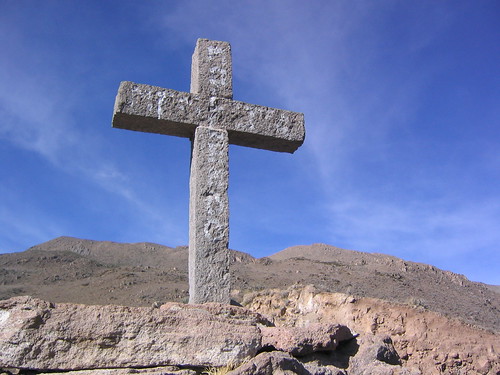
cc licensed flickr photo shared by Phillie Casablanca
Christians today face many challenges. Some of these challenges have been around as long as Christianity has been. Others are new or worsened by society’s growing apathy towards organized religion and by technological advances that bring images and thoughts that assault our beliefs into our daily lives. The following are five of the worst challenges Christians most face each day.
Questioning One’s Faith
From the beginning days of Christianity, there have been doubters. One of the first examples, of course, was the disciple Thomas, who did not believe that Christ had been resurrected. He told the other disciples that he had to see and touch the wounds of Christ himself before he believed that he had truly risen.
Like doubting Thomas, at one time or another, most Christians question their faith. It might occur during a time when nothing seems to be going right or during a terrible tragedy. It is then when Christians often ask God — like Job and even Jesus did — why did He forsake them?
The truth is Jesus Christ never promised Christians that life would be easy. In fact, he said it would often be hard. But Jesus promised that he would be with His believers during these difficult times. Like the famous poem, “Footsteps” says, Christians do not see Jesus’ footprints walking alongside of them during these times of trouble because he is actually carrying them.
Being a Living Example
It is easy for a person to say that they are a Christian. But it is much harder to live like one, especially in today’s society where bad behavior often goes un-penalized and is even sometimes rewarded. Although, God does not expect Christians to be perfect — because as humans, they cannot be — He does desire for them to be a living example of Christ.
Living in a Less Christian Nation
According to a survey done by CNN, fewer people today call themselves Christians than they did 20 years ago. The study, which was conducted in 2009, revealed that about 75 percent of Americans considered themselves Christians. That number was 86 percent in 1990.
As the nation has become less Christian, the pressure to be a Christian has lessened and so people have started to stray from the church. This is especially true of the younger generation who are seeing less of their peers attending church and so wonder why it is okay for them to be non-religious and possibly even non spiritual. As the nation becomes increasingly less spiritual, more people seem to be falling away from the Church.
Sharing Faith Without Becoming “Scary”
Christians want to share their faith, but many are not sure how to do so without making people want to run away. Too many times in the past, Christians forced their views on others in ways that made them feel uncomfortable. Unfortunately, it still happens today. One of the worst examples of this is the Westboro Baptist Church, which attends funerals, holding up signs that are horribly offensive and gives all Christians a bad name.
While most Christians know that the Westboro Baptist Church members do not represent their faith and beliefs, many non-believers do not.
Not Being Judgmental
It is hard sometimes for Christians not to look down their nose at or avoid those they consider sinners. But Jesus did not walk away or shun sinners. Instead, he spent time with those who lived on the fringe, teaching them about his beliefs.
Christians have to understand that God does not want them to spend time only with fellow believers. He wants them to go out and be a living example of His word and show non-believers the gifts God can bring into their lives.
And Finally
While Christians face many challenges today to their faith, God has promised to be with them during their struggles. Christians never have to feel alone in these times, as long as their faith in God remains strong.
Terry Hamilton is a youth pastor and contributor at OnlineChristianColleges.com, a source of information about the best online Christian Colleges and what each school offers students.
I worship myself?! | Vicki Goes to Washington
I couldn’t have said this better myself, so here is the source from former SNL comedian Victoria Jackson.
Jesus talked to us about worship.
He said where your treasure is – there you heart will lie.
Where you heart is . . . that is what you worship.
http://vickigoestowashington.com/2012/04/i-worship-myself/
Gray Saturday

I wrote this many years ago and post it every Easter weekend as a reminder. May it speak to you in some small way.
SMO Periodic Table And App Map Help You Organize Your Social Media Campaign

 If you rely on social media to market your website or blog, it is important to know which websites and tools to use to increase your following and connect with your followers. The SMO Periodic Table places the most useful SMO applications on a convenient table to help you see at a glance the benefits each website offers. The included App Map groups various social media apps by their use.
Both tools are conveniently located on a single printout with legends for each tool. You may not be familiar with every tool listed, so it will give you ideas on web-tools or apps to try. Most apps are made for Twitter, but some will also work with other social media websites. A few apps are no-longer available, but are included to show which tools have taken their place.
SMO Periodic Table
The SMO Periodic Table progresses from left to right with apps on the left helping you gain credibility, and apps on the right help you gain followers. It’s important to remember that both are important aspects of your social media advertising.
These tools help you research how you broadcast your message to listeners, whom are your target audience. These are the people who will visit your website and, hopefully, buy products from you.
The middle rows are Publishing Tools, which help you target posts to get the most return on each message.
At the bottom are Broadcasting Tools. These apps help you cull your followers to get a more accurate follower count. Use these sparingly, especially if you are new to Twitter.
App Map
The App Map groups like applications together. Most likely, you won’t have time to use every single application listed on the SMO Periodic Table, but this will help you choose the apps that will have the most benefit for your website. Apps are grouped together by theme, and a legend at the bottom explains how the apps are similar. Some apps belong to two or more categories, so these apps offer multiple benefits for users.
Social Media Web Hosting
Brought to you by Juliana from InMotion Hosting, a VPS Hosting provider based in Los Angeles. Check out all her tech Twitter tactics on @JulianaPayson.
God on a Bus


I attended the Christian Book Sellers (CBA) convention in 2003. The event was included as part of a Christian Leaders and Speaker Seminar (CLASS) conference for writers who wanted to learn about the publishing industry. The secondary goal of the seminar was to secure an audience with publisher’s acquisition editors. I met my publisher at this event, and a year later, I experienced a milestone in my publishing journey when the UPS man knocked on my door with two cases of my newly minted book.
While I walked the convention floor, looking for the perfect publishing partner, one of my most memorable events was a conversation with a house wife, and mother of a handful of young children that I met on the shuttle bus.
At the end of along day, I stood in front of the Indianapolis RCA Dome, waiting for the bus to our hotel. When the commuter bus arrived, I coaxed my tired feet up the steps, and found a seat toward the back. Across from me was a woman I remembered from the prior year’s Write to Publish writers’ conference in Chicago. She’d won the “New Book of the Year” award at the conference, and I remembered her because of the mental note I made as she went forward to receive her prize. “Someday, I would like to be in her shoes.”
I smiled and introduced myself, and as the bus lurched from stop to stop, we talked about the publishing process. Like most writers I’ve met, she seemed interested in passing along a bit of encouragement. As we talked about the submission process, she asked how many book proposals I’d sent out.
“Oh, eight, maybe ten.”
“Don’t give up.” she smiled. “I submitted the proposal for my first book 63 times. The award I won in Chicago was for my eighth book. Keep if up, you’ll find the right one.”
The crowded bus shuddered to a stop, and she said this was her hotel. As quickly as our conversation started, it came to an end. But nine years later, I haven’t forgotten that God-moment on an Indianapolis commuter bus. Sixty-two failures to get a “Yes” on number 63 could sound discouraging, but I took it as confirmation. I was doing the right things. I was walking a road that other successful writers had blazed before me. I could make it as a writer; it would simply take persistence, patience and perseverance.
The Four Key Questions


Getting your book in front of a traditional publisher’s editor requires mastering a document called a book proposal. A formal proposal presents an editor with essential information about your book, and does so in a concise manner. Imagine an editor’s office filled with projects, deadlines, books strewn about the floor. Each pile represents an author, book or potential project, and the editor also carries the responsibility of managing and generating corporate revenues. Meetings, phone calls, and deadlines define his or her day. Additionally, an editor has to react to authors who don’t meet deadlines, artists who don’t want their words changed, and a publishing board who, at the end of the day, has to justify decisions in terms of dollars and cents.
Into this well oiled, squeaky wheel-managed world you arrive, with little more than an idea and a spark of hope. If we were playing a childhood game of “Pick out which of the objects in the picture doesn’t belong” you just got circled with a bright red crayon. You are the foreigner in an editor’s world. Consequently, it’s your responsibility to learn to communicate and connect to an editor in the way he or she wants to receive information. This expectation gave birth to the book proposal, which is a five to six page document you must master if you expect to get an editors attention, and you have about two minutes. That’s all most editors will invest in a new proposal before moving onto the next.
While this may sound dire, you have one important fact on your side. You have something the editor wants. You have a new book, a fresh view of an old idea, or an experience that will encourage, inform and motivate the editor’s readers. You have a chip to play, and if played right it can turn into an offer for a book contract.
So here are a few pointers when you’re writing your book proposal.
- Read, reread and proofread your proposal numerous times. This is your one shot at making a first impression. Make sure you put your best foot forward.
- Search for a publisher that publishes the kind of books you are writing. A publisher known for novels isn’t interested in non-fiction, and vice versa. It’s your responsibility to know your market.
- You must answer these four questions:
- What is the book about, including the message and the take away value for the reader?
- Who is your target market; what other books are selling to this market, and why is your book different and better than you competition.
- Who are you, and why are you the perfect person to write this book. What about your experience, education, personal history makes you the person to write this book.
- As a writer, who is already listening to you, or what is your platform. Do you speak on the topic and have a blog with “XX” number of readers, a social media presence, etc. Platform translates into interested readers which becomes book sales for the publisher.
In the next few posts, I will break down these four questions, and fill in the content you need for your book proposal.
Finding the Right Publisher for your Book


Publishing houses are like books and authors. Not every book is for every reader. Authors become recognized for the work they produce. In the same way, every publisher has a specific audience, one that is demographically unique from the publisher across town. To use Seth Godin’s buzz term, they each have a unique tribe, and publishers take their tribe very seriously. At the forefront of an editor’s acquisition decision is a question as to whether or not their customers are likely to purchase “this kind” of book from them.
For example, you wouldn’t expect to see National Geographic publish the next Avant-garde novel. Tyndale House isn’t going to publish a weekend romance novel that made Harlequin Romance publishers famous. To do so would insult their tribe, which would result in immediate harm to their reputation and revenue.
So as a writer, it’s your responsibility to find a publisher that matches your book’s genre and message. Regardless of the type of book you’re writing, you will find a few publishers that specialize in your genre, and many that don’t. To find the right publisher, try this simple exercise.
- The next time you are at the mall, take some time in the local book store, and peruse the shelf where you want to see your book some day.
- Look at the existing inventory, and find out what publishers are printing the books that are similar to the one you’re writing.
- You now have a list of the publishers you will want to approach. Look these publishers up on the web, and take note of the other books they publish. Make sure you are targeting a publisher that is a “good fit” for your book.
- Now work at getting the publisher’s permission to send a proposal.
As we continue exploring the publishing process, you will find that writing your book is only 1/2 of the work. (some publishers say that writing is less than a third of an author’s work). While you are still crafting your book and polishing chapters, start looking for a publisher. You will find that you can approach publishers while you are still writing. You can often secure an invitation for a book proposal before you cross the last ‘T’ and dot the last ‘I’.
Letters to Ethan: A Grandfather’s Legacy

One day I started thinking about my own mortality and how I would want to be remembered by my children and grandchildren. I just didn’t want to die and leave them a memory, although positive memories are certainly important and valuable. I wanted them to know that they’re here for a purpose, that God loves them; that I love them; and I wanted to share the mistakes and miracles of my own life with the hope that it would be of some benefit to them as they encountered their own challenges and opportunities in the future. Why do you think it’s important for letters to be left behind?
I believe that it’s important to leave letters for your children and grandchildren to give them a perspective on life in general, your family traditions, the role that faith has played in your family as well as the wisdom that you’ve acquired over the years. In addition, each letter is a ray of hope in that it communicates to the recipient that we all face challenges and obstacles in our lives and that with patience, persistence, passion, and purpose those challenges and obstacles can be overcome and result in a meaningful life.
Do you really think letters can have an impact on young people?
Absolutely. I’ve seen the results first-hand in adult children whose parents left legacy letters for them. In addition, when parents have shared letters with their adult children, the feelings of joy, contentment, and satisfaction have strengthened the bond between them immensely. In addition, when a young person realizes that a grandparent took the time to write them a legacy letter, it has a definite impact upon their sense of self-esteem and self-worth.
What inspired you to start Legacy Nation? (www.legacynationusa.com)
Two events triggered my passion for Legacy Nation. First of all, I had two sets of grandparents — one that I lived with growing up in a two-story flat in upstate New York and knew as well as my parents, and the other set of grandparents that I never met. I still remember the happiness that I enjoyed with the grandparents that lived upstairs and the sadness that I felt at now knowing anything about my paternal grandparents.
I saw Legacy Nation as an opportunity to bridge two worlds. Parents and grandparents could write letters to their children and grandchildren on an ongoing basis while they are alive, sharing their wisdom, experiences, trials and tribulations, joys as well as the faith, hope, and love that they have in their kids and grandkids. Their children and grandchildren then would have those letters as a legacy that they could learn from and continue to build for their children and grandchildren as well.
At the same time, our nation is hurting. We need a re-energized faith, a new hope, and a return to that family foundation of love and respect that our forefathers relied upon to build these United States of America.
Progress is wonderful, technology is great, and the speed of change is a fact of life. Unfortunately, traditional family values are feeling the pinch from our current economic crisis and the demands placed upon our time result in less meaningful interaction with our kids and grandkids. I’m worried about the future of my children and grandchildren.
I founded Legacy Nation as a means to return to those values that made our nation great as well as an admired and respected people, a beacon of hope to mankind, and a blessing to our children and grandchildren.
If you could offer just one piece of advice to the next generation, what would it be?
God gave you three priceless gifts: your emotions, your intellect, and your will. And if you remember this thought you’ll know what to do with them: “God said, ‘Let’s build a better world.’ And I said, ‘How? The world is such a cold, dark place and so complicated now that there’s nothing I can do.’ God in all His wisdom said, ‘Just build a better you.’”
Where can we find out about more opportunities for a free copy of this book?
Follow @ChristianSpkrs on Twitter.
I was given a complimentary copy of this book from the author in exchange for posting the author’s interview on my blog. This blog tour is managed by Christian Speakers Services (http://ChristianSpeakersServices.com).
Getting Permission


Getting permission to send an editor your book proposal is a “chicken and the egg” dilemma. Most publishers do not accept unsolicited manuscripts or proposals – unsolicited being the key word. Yet publishers print and publish books every year. They have to be talking to someone, right? So as a new author, how do you get your proposal in front of an editor?
Assuming you don’t want to go to jail as a stalker because you follow an editor to his home, church and favorite grocery store, there are a few things you can do to connect with editors, and secure the coveted invitation to submit your proposal.
The most successful way meet an editor and pitch your project at a writers’ conference. Many national publishing houses fill 20 to 30 percent of their annual production calendar by connecting with authors at writer’s conferences. The advantages of attending a writers’ conference are too numerous to list, but here are a few as they relate to editors and book deals:
- If you set time aside, and paid to attend a writers’ conference, you’re saying to an editor that you are serious about your craft.
- At a writers’ conference, you meet and talk with editors personally. The publishing business is built on relationships. Face time with an editor allows him or her to meet you, the author behind the words.
- Many conferences invite editors for the purpose of meeting their conferees. Editors are in acquisition-mode while at a conference. This means you are connecting with them at a favorable time for both of you.
Most conferences provide only limited time and appointments with editors throughout the conference. If your target editor’s dance card fills up before you secure an appointment, here’s another tip. You can often sit with an editor at lunch and dinner, and pitch your elevator speech then. I once pitched a book project while walking across campus between sessions to an editor I couldn’t meet with personally. While he turned me down, he gave me names and emails of two editors at other publishing houses across town, and allowed me to use his name when I contacted them.
Don’t let the “no unsolicited manuscripts” clause be an obstacle to your publishing goals. Invest in yourself, get to a writers conference, and find a way to connect with the editor you believe may be interested in your proposal.


Find | Follow | Friend Tim